

Species and Race
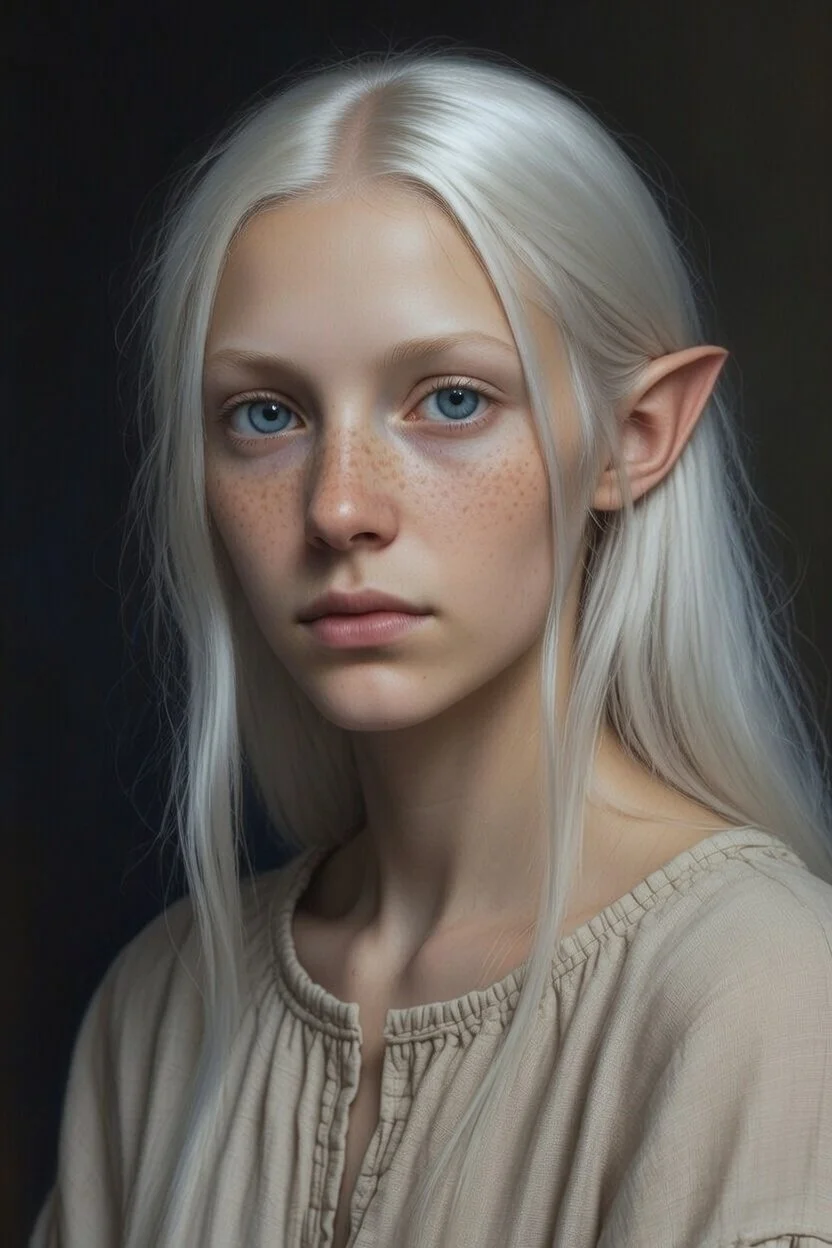
Species is a technical assignment, while Race is subjective. For the purposes of game mechanics a species denotes a broad category that accounts for mechanical elements such as propensity for strength, intelligence, how naturally predisposed they are to magic, size elements, as well as basic physical components. Race, in a physical sense, is a descriptor for how denizens of that species may diversely be described. It will denote things like variations in skin, eye, hair color, or for some species, more dramatic components like the shape of their horns. Selection of a race will inform non-mechanical aesthetics about the character and are purely for roleplaying purposes. There are six main species and three options for half-breeds that players can choose from when making a character. You must choose a species for your character from the list below:
Eldan
Elfling (A Mix of Eldan and Sidhe)
Human
Nemedian
Shadai
Sith-Anor (A Mix of Human and Sidhe)
Sidhe
Thorfor
Urchin (A Mix of Eldan and Human)
Inter-Breeding
Humans, Sidhe, and Eldan all descend from a common ancient ancestor, and while distinctly separate species, are capable of interbreeding with each other. The males of these efforts, however, are born infertile, and the females only produce children of the same species as the father. Physically, they carry a blend of their paternal and maternal parentage races.
Nemedians, as a type of Beastman, are more alike to Centaurs, and Satyrs, than they are to the other species. This makes them incapable of interbreeding with the other player character species. Thorfor are a unique species with no other genus of their type in the world, and do not reproduce as other species do. Shadai are anomalies born only to two human parents and are all infertile.
Prejudice
The Blood Vale is a hotspot for the whole of the known world, and it has a diverse racial and cultural representation. By old world standards, it is remarkably tolerant of this diversity, at least by comparison to the rest of the world. Despite this, Humans are by far the most dominant species, but even within humans, variations in skin tone, ethnicity, and cultures, create dividing lines.
Eldan
The Eldan are a reclusive people by nature, the vast majority of them nestled in the land of Vistelvin, in the heart of Anthuwin, where the mournful song of Dulemar, the Whispering Spire, can be heard for miles. Eldan can be found all across the world, for despite their love of solitude, their love of exploration is a greater calling.
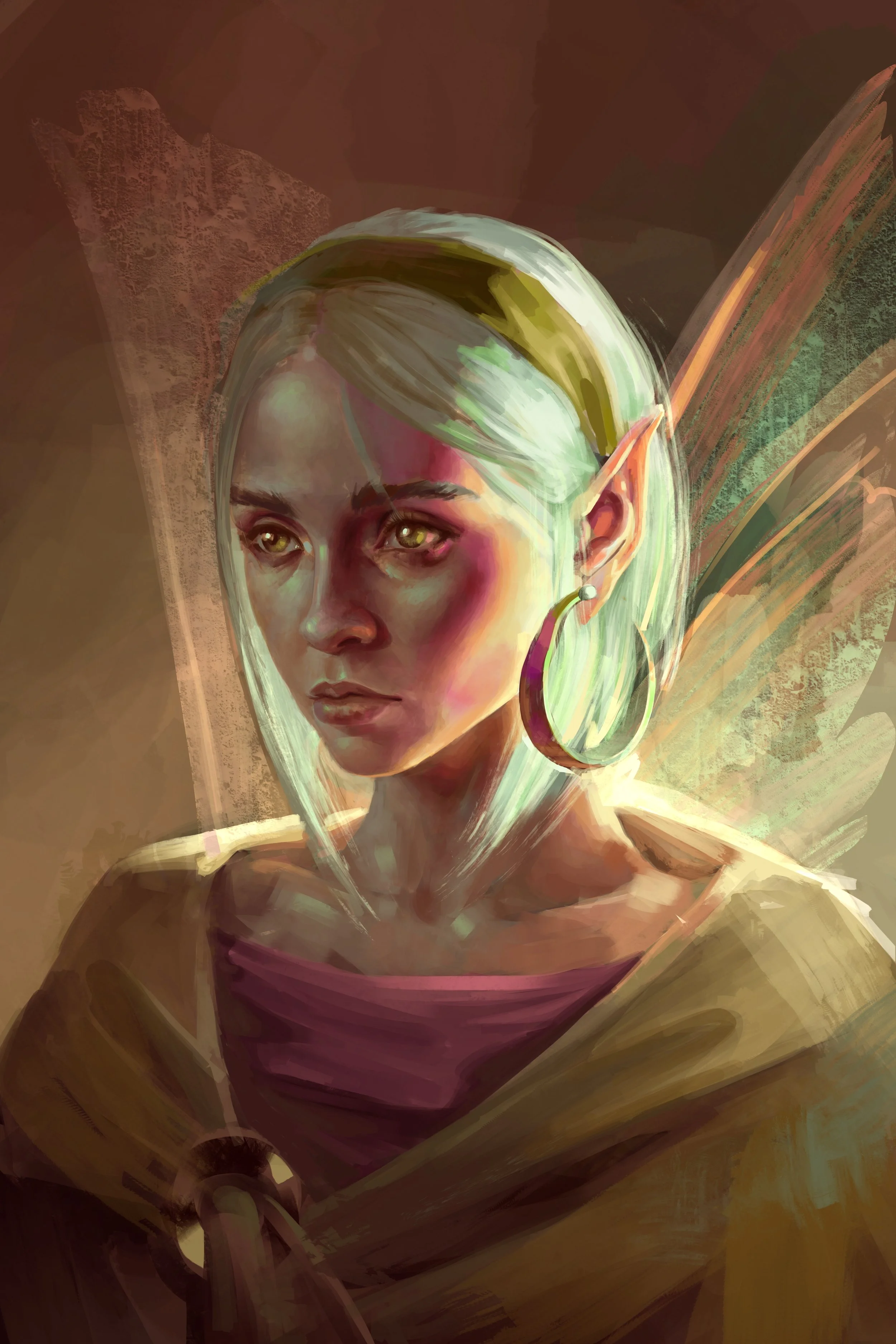
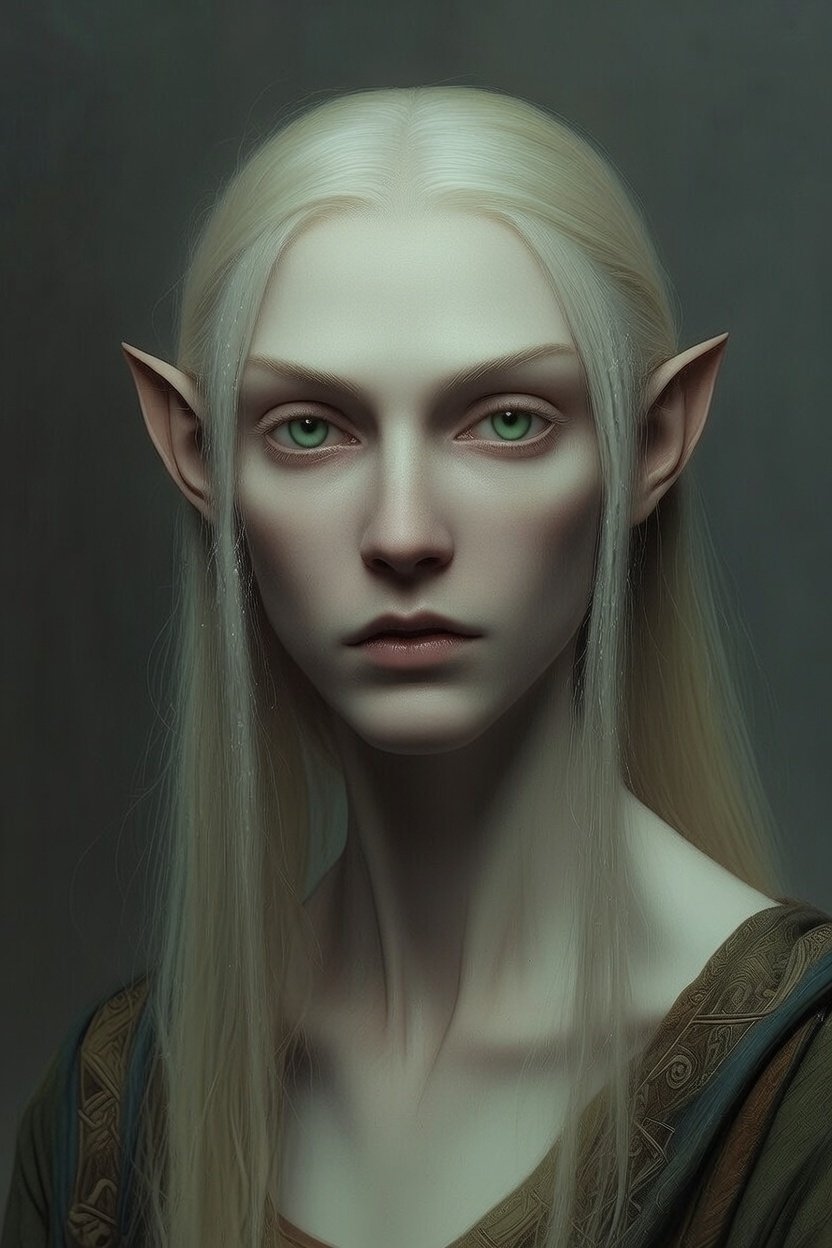
Compared to humans, Eldan are spry and lithe, with an almost childlike frame. Their pale skin and uncanny hair and eyes give them an elf-like quality, mistaking them for Fae by those unaccustomed to their presence. Eldan also have slightly sharpened ears, less pronounced than a Sidhe. Eldan hair does not gray with age, nor do their features prune nor wrinkle. As they tan, their skin gets a darker shade of blue. Rumors speak of Eldan from deep within Tullisaba with indigo skin and ornate wings not unlike a butterfly. While they are abundant in Anthuwin, and in their homelands in Vistelvin, the Eldan can be found in high densities in the Blood Vale, Alendor, and Mydlothnyr. Other people casually refer to an Eldan as "Moth" or "Flutters," but the word "Eldan" comes from Sithi language roots, and means "Child."
Humans, out of their own lust and nature, consider Eldan women to be harlots and lustful, which could not be further from the truth. They are also considered to be thieves, liars, and swindlers. Eldan are more likely to be sold into slavery, and are often employed as servant staff to lords, and wealthy merchants.
Eldan Races
Azrehan
Regions: Southern Edor and Adoran Regions
Appearance: Bright yellow or flaxen hair, sometimes pale red or pink, with eyes of amber or gold, and pale white skin that can become light blue if sun weathered. Their wings here are furry, and dusty, like a moth.
Ilroth
Regions: Aeberius and Nidurus Regions
Appearance: Dusty gray or black hair, pale powder blue tinted skin, with eyes of purple, or even red, and translucent wings like a dragonfly.
Elfling
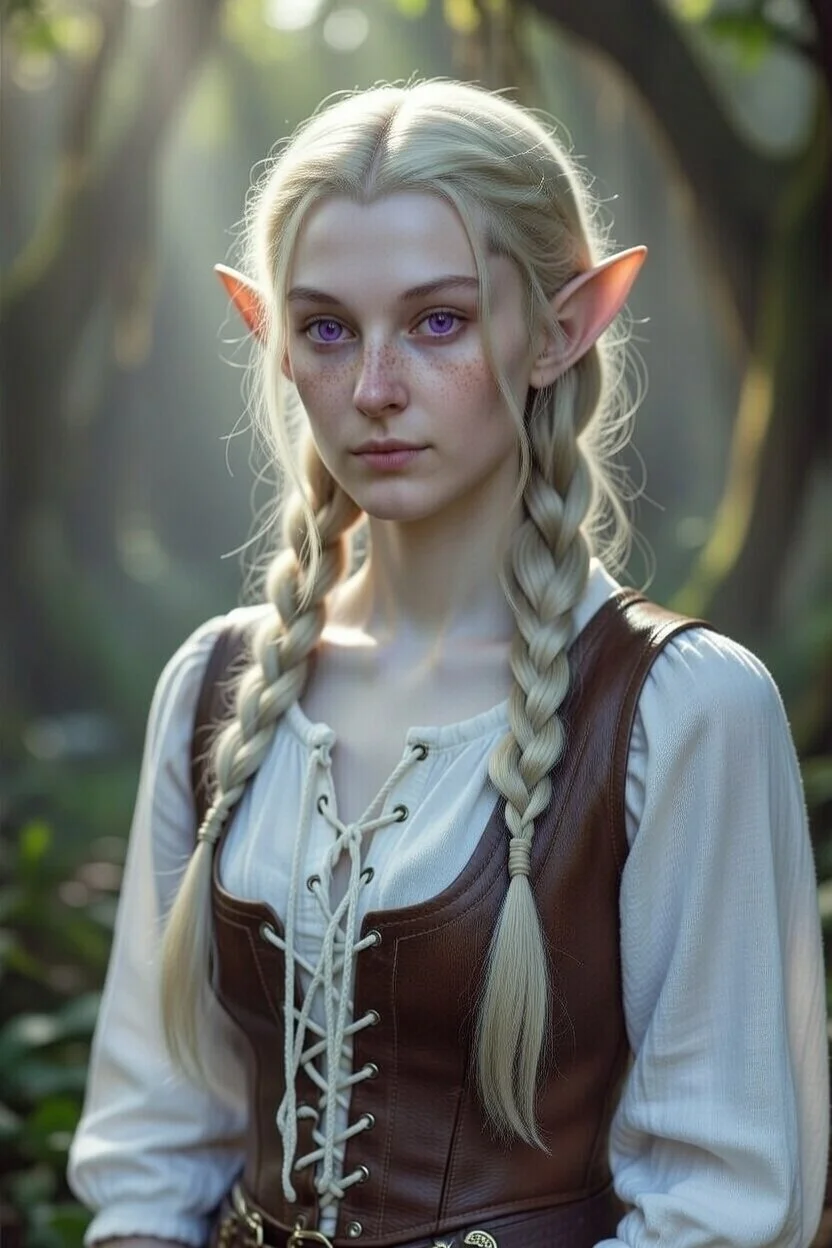
Elflings are born from the rare and tenuous union between the Sidhe and the Eldan. Possessing traits of both races, they are a bridge between two worlds—yet often belong fully to neither. Where the Sidhe carry ancient majesty and aloofness, and the Eldan embody whimsical exploration, the Elflings inherit a curious blend of pragmatism, wonder, and mysticism.
Elflings combine the lithe, sharp features of their Sidhe ancestors with the delicate and ethereal appearance of the Eldan. They are smaller and less imposing than the Sidhe but taller and more solidly built than the Eldan. Their ears are slender and pointed but lack the extreme elongation of a Sidhe's.
Elflings are rare and exist primarily in human lands where Sidhe and Eldan influences overlap. These tends to make them the product of very large trade cities, and makes them less of an oddity in Portasang. Outside these areas, an Elfling is considered an exotic and curious presence.
Called "Halflings" by humans or "Ainsith" by Sidhe, Elflings carry a reputation as tricksters, misfits, and outcasts. Eldan view them as "waning lights," while the Sidhe often dismiss them as "fading echoes." These terms reflect their mixed heritage, seen as a dilution of greatness by either parent race.
In reality, Elflings are fiercely adaptable, creative, and resistant to despair. They often embrace their dual nature, using it as a source of strength rather than shame.
Human
Industrious and populous, Humans have made most all corners of the world their home. They are ever present, and are by far the dominant peoples of the world. Humans are known for their predisposition for establishing nations, cities, trade, and commerce. They are at the core explorers, seeking to take all things to their limits.
Humans are the baseline species, with wildly ranging heights, skin color, hair, build, etc. Humans can be found most anywhere. Their penchant for discovery and exploration in search of commerce and land has seen them make a home in most any environment, adapting quickly. In the Doshik tongue, humans are called "Prava", which is a slur meaning "Weak." In Lewrian and other Sithi languages, humans are called "Kaijik," which means "plague" or "disease." Humans are mistrusted by the other races as much as they mistrust the denizens of the world. They are seen as hungry and exploitative, and are considered the root of all the ills that befall the world. While this is true, it is also a broad brush stroke. Humans are simply better at it than most.
Human Races
Humans are the most profoundly shaped by their regions and climate, and their “race” derives from the large subcontinents they hail from: Edor, Adoran, Tullisaba, Nidurus, Aeberius, and Mercedor.
Those of far northern climes, such as Mercedor, are fair haired (light browns, blonde, orange and red) with light complexion of skin, and a predisposition to blue and green eyes. In more temperate climates such as Edor and parts of Adoran, their hair darkens to browns and blacks, with the occasional blonde. Humans of Aeberian or Sargosian heritage are more swarthy, with olive skin, thick and curly hair, normally black, or dark brown, with the rare occurrence of blonde. Eyes are of all the human range in these regions: brown, blue, green, hazel, gray.
Niduran humans are uniformly dark of hair, thick follicles, with a light to rich brown skin, although humans from the Kalistan isles tend to be lighter of skin, with dark hair that is more thin. Tullisabans have even darker skin than the Nidurans, uniformly dark eyes, and coarse black hair.
Nemedian
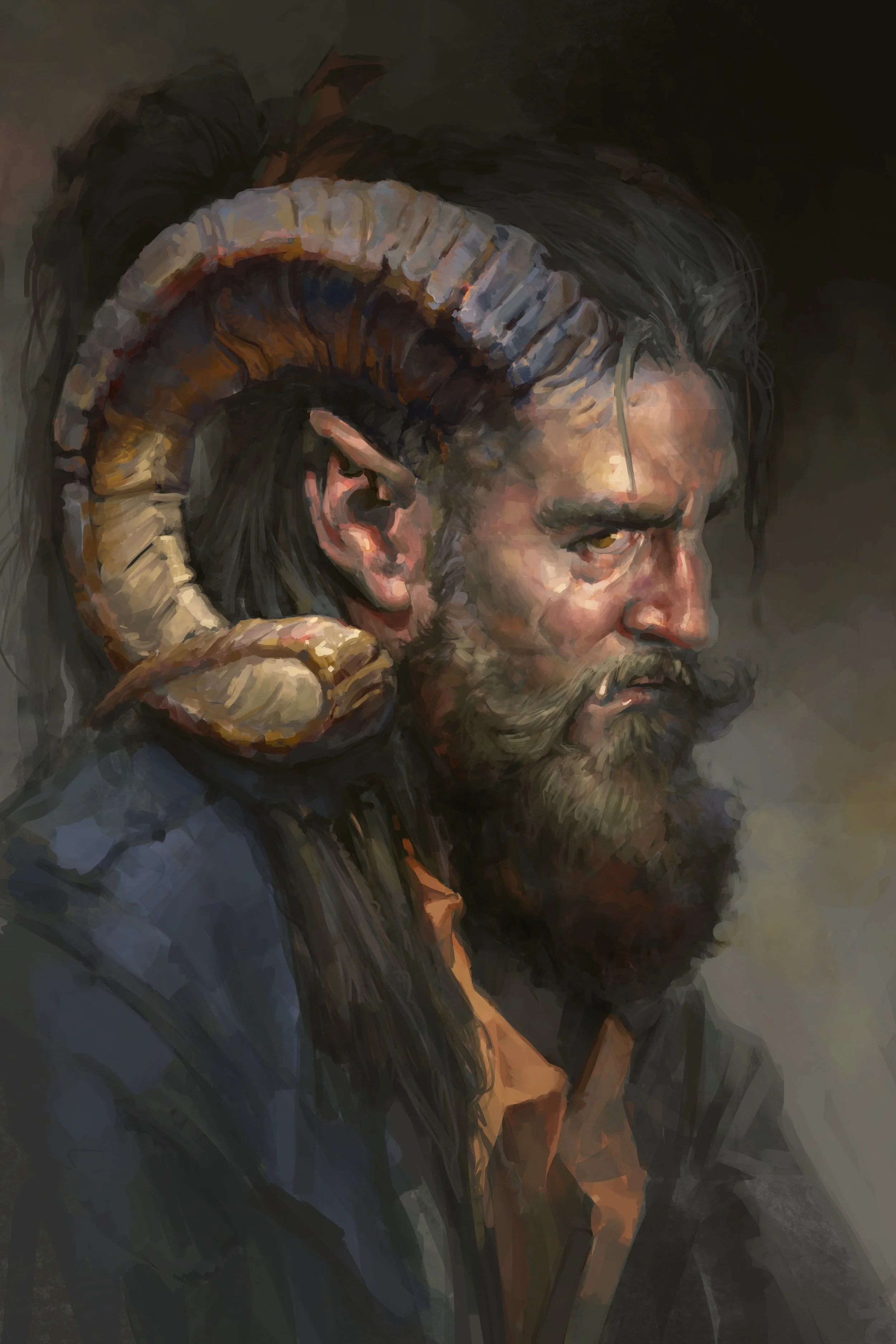
Warriors, huntsmen, and feared by all for their battle-rage and their size, the Nemedians are only a minor people in the world for their lack of desire to congregate or settle in one place. They are clan organized, but in times of conflict, are known to form into massive warbands, united under a single warlord; one strong and charismatic enough to hold the warband together. Large and imposing, Nemedians are humanoids with deeply animal-like features. They have thick hair, fur lined limbs and torso, with ram-like horns, and thick jaws. Their arms are long and shoulders broad for their frame.
Nemedians, while largely nomadic hunters, have carved out an empire in the lands known as Bodas, but maintains a large presence in other corners of the world.. Nemedian clans typically stay together, creating communities in lands where hunting is plentiful. While this brings them into conflict with up and coming lords who are trying to lay claim to swaths of hinterlands, smart lords appeal to the warlike nature of the Nemedians, hiring them as irregular soldiers in exchange for hunting rights.
Called Beastmen by most humans, varied only by the languages, Nemedians have a variety of names. The Amonian word for Beastmen, for example, is Bastrom, literally joining the word for Beast (Bas) and Man (Trom) together. Nemedians have a terrible rage, and are known to get angry quickly. This is a stereotype because it is true. They are seen as dull, and dimwitted, but this is actually not the case.
Nemedian Races
Boreans
Regions: Mercedor and Edor Region
Appearance: Nemedians from Bodas, or the rest of the Mercedor region, have skin the color of ivory with curved ram horns, hair that is dark brown to light red, fur that is dark brown to black, and eyes of light amber to dark brown.
Akaven
Regions: Aeberius Region
Appearance: The Akaven have horns that are long and twisted, like an antelope, deeply brown tanned skin, eyes of hazel or blue, and hair and fur of black or dark brown.
Raman
Regions: Nidurus, Tullisaba Regions
Horns that are wide and pointed, like a bull, and dark brown skin with coal black eyes, fur and hair that is deep brown or black.
Shadai
Born to human parents, the Shadai are an anomaly. While rare, from time to time, a human child is born a Shadai. They are roundly considered ill-omens, and many are abandoned, killed at birth, or hidden from the world, only adding to their poor reputation. While none know how a Shadai is born, everyone is certain they do, and this has given birth to all manner of odd custom: abstaining from procreation under a new moon, eating eggs after sundown, etc. The first recorded birth of Shadai happened just after the Rending.
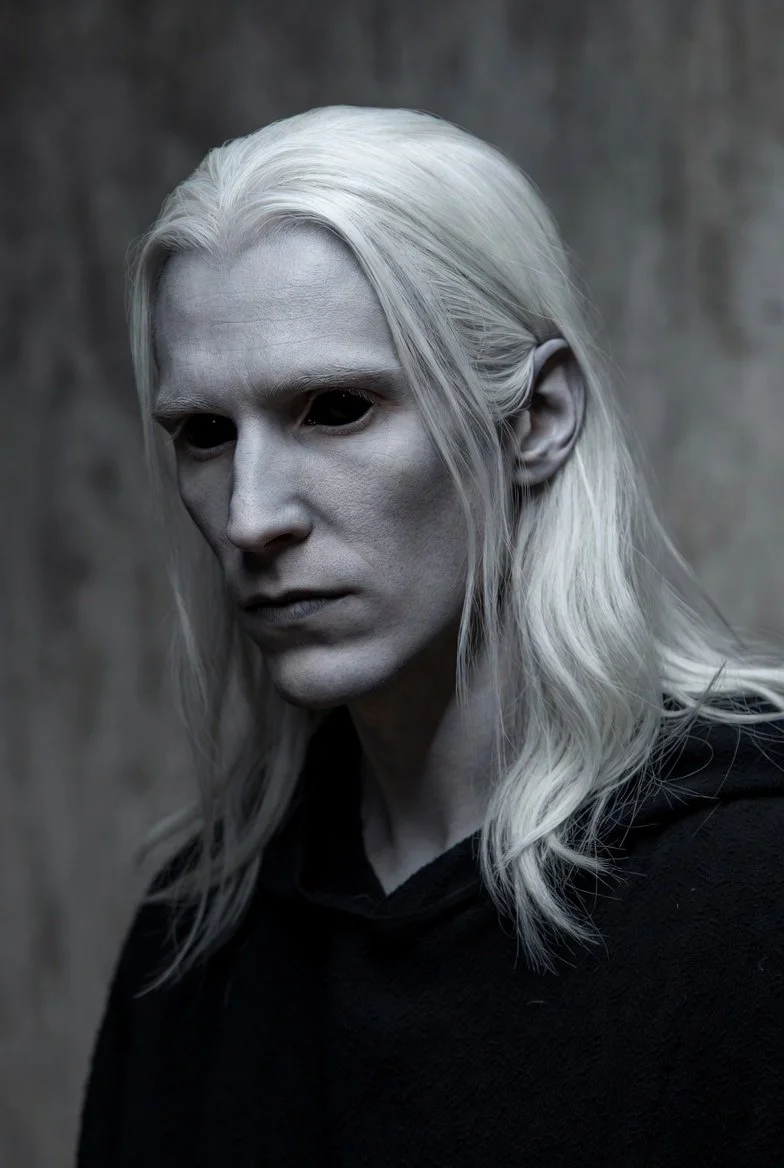
Shadai are gray and pallid, with coal black eyes, and platinum white hair. This is all that distinguishes them from other humans, but is stark and noticeable, especially up close. Shadai are found anywhere a human can be found, though at 1/200th their numbers. In the Dominion, Shadai are considered blessed by Aurisus, and are elevated to the highest segments of society. In almost all other places they are feared, shunned, and mistrusted. They are called “Stillborn”, or “Coalmen.” People are creative with their aspersions. In all regards, a Shadai is a human that looks different, but is otherwise a human. But the mystery of their origin and their alien appearance has caused others to consider them evil, cursed, and consider keeping their company a courting of dark fates.
Shadai resemble any human relative to their ethnicity by way of features and facial composition, but hold some noted exceptions. These exceptions are immutable and do not vary by ethnicity. All Shadai have skin that is light gray, and like the Sidhe, does not darken or burn in the sun, but becomes paler over time. Their hair is a shock white, and their eyes are coal black, with no visible whites, nor iris.
Sidhe
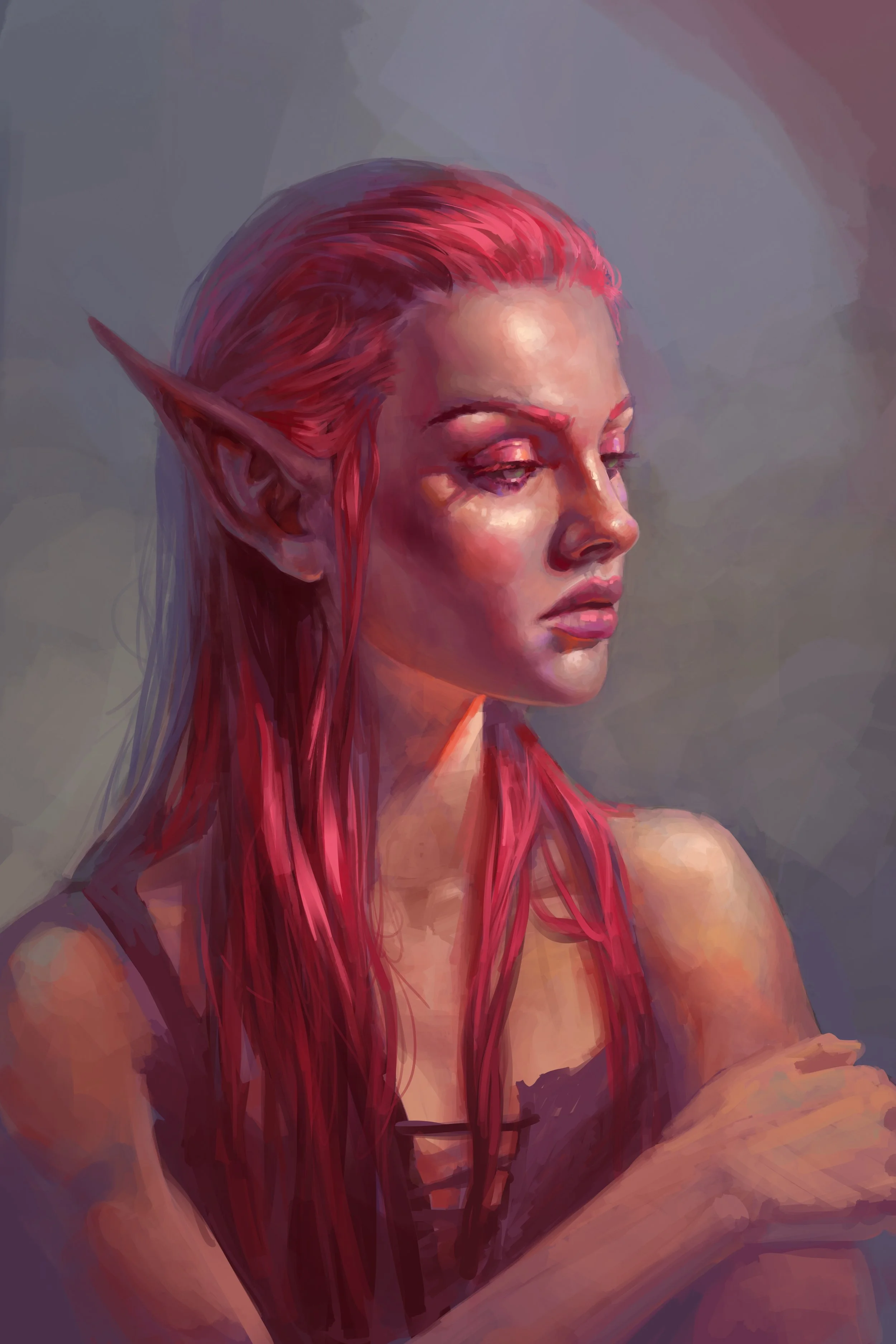
The Sidhe are an ancient race in the lineage of the Fey themselves. They dwell solely in the physical world, severed from the Fae Realm, trapped in mortal form. They have carved great kingdoms on the world, and for the most part, stand apart from human kind. Tall and thin with elfen features, the Sidhe have a haunting beauty. Their features are gaunt and sharp, with large slender ears that rise to a point. Sidhe, while not prone to exploration as humans are, can still be found in the more human population centers, though this is the exception. Two great lands are the home of Sidhe sovereignty, the lands of Lewria, and Mystabor. The Sidhe are also prevalent in the far east.
They do not grow facial hair, nor does their hair or skin show meaningful signs of age, save a frown line, or furrowed forehead. Sidhe skin does not burn or darken in prolonged sunlight. The common epithet for Sidhe is “Elf,” and many humans default to this name when referring to them, although the Sidhe do not care what humans call them. They are seen as cold, detached, and by many accounts, cruel. These are not too far from the truth. Their mystic heritage and long life make them see the other people of the world as children, and reckless. While they suffer prejudices in human lands, they are no more fair to non-Sidhe in the lands they hold dominance.
Sidhe Races
Valnoth
Regions: Edor Region
Appearance: In these regions they share fair skin, almost alabaster white, with hair of platinum blonde, or ivory, and eyes of brilliant clear blue or green.
Melendil
Regions: Adoran and Aeberius Regions
Appearance: Skin is more human and flushed although still light, hair of auburn, light brown, and eyes of red, purple, or turquoise. The ears of the Melendil are noticeably shorter, though still pointed at the tip.
Yosei
Regions: Nidurus Region
Appearance: Pale white skin and hair that is either a fair blonde, white, or pitch black. Their eyes are clear blue, green, or ruby red.
Sith-Anor
The Sith-Anor are a unique and enigmatic half-breed race, born of a union between Humans and the Sidhe. Trapped between the industrious nature of their Human ancestry and the ethereal heritage of the Sidhe, the Sith-Anor embody traits of both worlds. They are marked by their ability to adapt to mortal struggles while maintaining a faint tether to the Fae Realm, existing as wanderers of twilight.
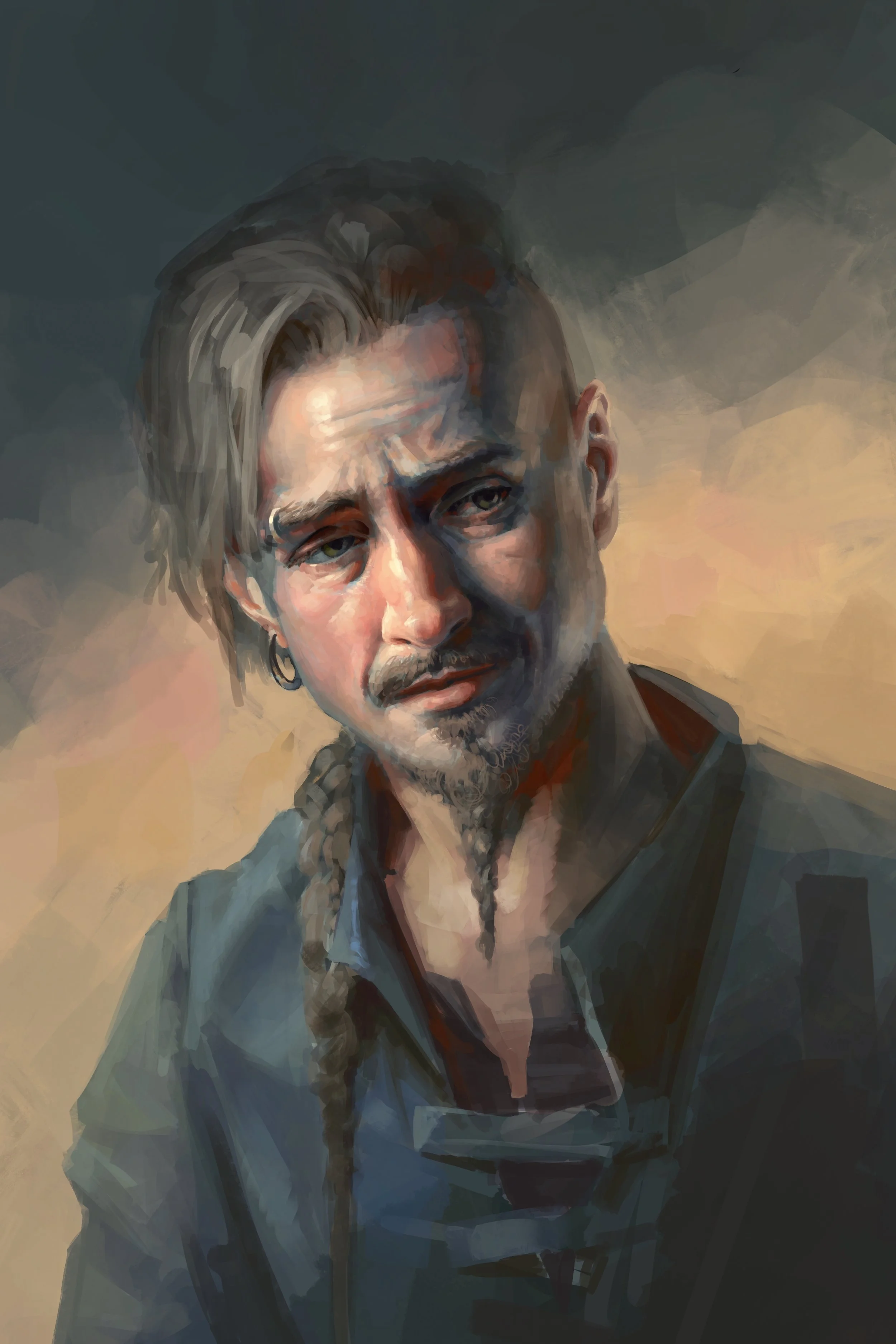
Sith-Anor appear as light and wiry humans, with ears slightly pointed at the tip. The Sidhe are far travelled and have homes in a variety of regions, making their contact with humans fairly common. They can be found anywhere humans and Sidhe are found in proximity. The Sith-Anor are fairly well accepted as a mixed-race, and they are easy to identify. Their name is of Sithi origin, meaning “Descended of the Fae,” but humans also frequently call them “halflings” as a mild aspersion. It is common for human nobles to marry a Sith-Anor bride, but as the males cannot provide any progeny, they are often treated as less “valuable” than their female kin.
Sith-Anor favor their human heritage and ethnicity, but inherit a slender frame, and ears that are slightly pointed at the tip. They are otherwise human in their skin, hair, and eye color.
Thorfor
The dwellers of mountains and steep hill country, the Thorfor are the most reclusive of all the races. While they do engage in trade and commerce with other peoples, it is rare for a Thorfor to travel lands outside of their home without others of their kind with them. They are born in the heart of their mountain home, Hersteller, and Thorfor are unable to mate and reproduce when they are away from their secluded sanctuary.
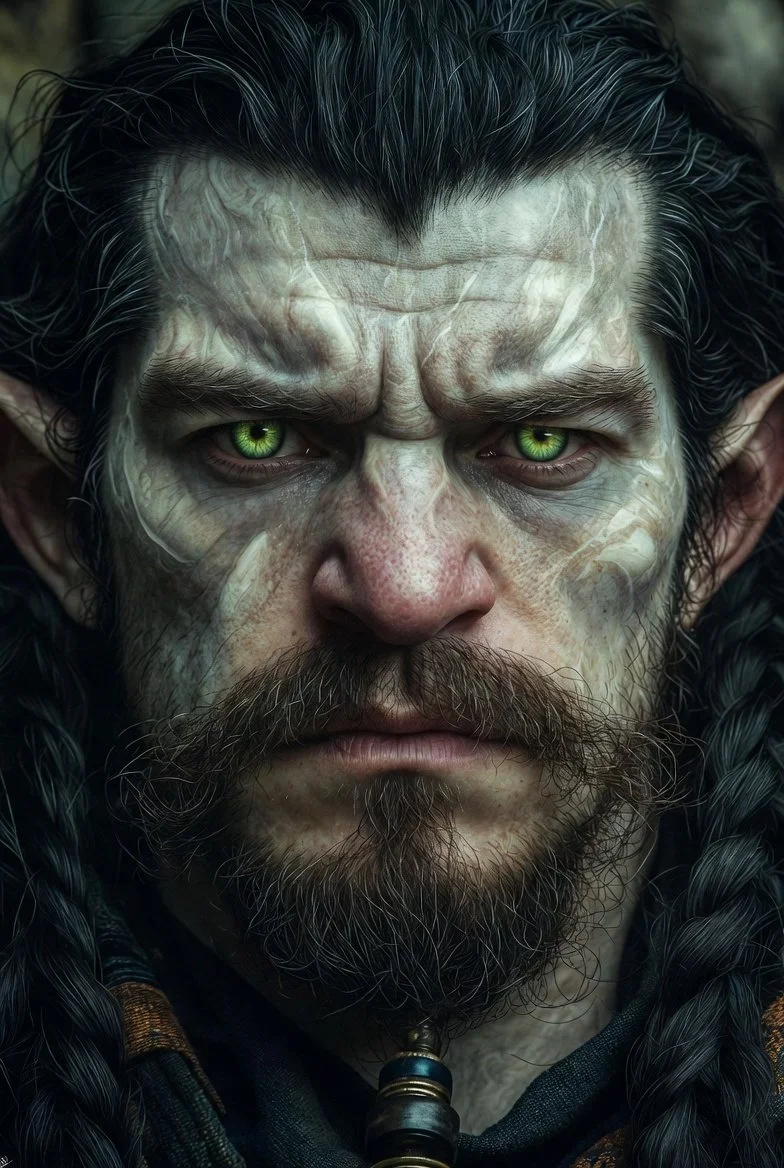
Stout and short, with broad features, and a dense build. Thorfors are unnaturally strong and durable. Their eyes are small in their face, and give off a flickering light, appearing like small twinkling gems. They have large noses and jaws, with coarse gray skin. Thorfor call the lands of Hyrhonn as their primary home. While they can be found in other lands, it is usually as part of some purposed group or trade effort. It is rarer still to find Thorfor women away from Hersteller, so much so that no one can say with any certainty that they know of a single person who has ever seen one.
Called “Dwarves” by many, or the more insulting “Stuntys”, Thorfor suffer a significant slew of aspersions, mostly referring to their height. By many accounts they are larger than Eldan, but their short arms and legs are the source of comedy to outsiders. Thorfor are known to be loud, stubborn, irritable, and are fond of drink, and feasting. That is, of course, when they are around others. Among their own company they are gracious, and temperate.
Thorfor hair is black, stone-gray, or dark brown, and does not gray as they age. Thorfor men have thick beards which they rarely shave, but do decorate. Thorfor hair is notoriously thick and strong, easily three times thicker than a human’s. Their eyes appear as gemstones, twinkling and small, and bright in color (normally red, green, or blue), with no whites. Their skin is uniformly light gray, not unlike a Shadai in coloring, but it is striated with ivory and white, appearing as marble. Thorfor are all born in one place, Hersteller in Hyrhonn (Adoran), and have no racial diversity to speak of.
Urchin
The offspring of a Human and an Eldan, these poor souls are rarely the product of a happy home. Most are orphaned, and their population is significant in large cities. Their prevalence on the streets gives rise to their name. Most can be found working as stable hands, or doing animal husbandry work on farms, due to their preternatural ability to work with animals.
Urchins look like small framed humans, light on their feet, but alien enough to be spotted on casual inspection. Their ability to glow when they are upset is a striking feature, and gives away their nature quickly. Urchins are the most populous of half-breeds, and they can be found anywhere Humans and Eldan congregate in large numbers. They are found in most any large city.
Urchin is the common name given to their kind, though terms such as “hoodlum” or “street rat” are interchangeable with “Urchin” in large cities. They have a reputation for criminality and theft and are generally mistrusted by most. While most of them have grown up on the streets, their association with crime is not without merit, even if it is tragically unfair. Urchins favor their human lineage and ethnicity over their Eldan heritage, with a few exceptions. First, their hair tends to be a lighter shade than others in the same ethnicity. Their skin coloration, and eye color, are otherwise uniform with their human heritage.
